
When it comes to charitable giving, many people want to support the causes they care about while also making the most of available tax benefits. A donor-advised fund (DAF) offers a simple and strategic way to accomplish both.
By contributing to a DAF, donors can claim an immediate tax deduction, invest their charitable dollars for potential growth, and distribute funds to nonprofits at their own pace. As DAFs continue to grow in popularity, understanding how they work—and how they can fit into your financial plan is essential for making informed giving decisions.
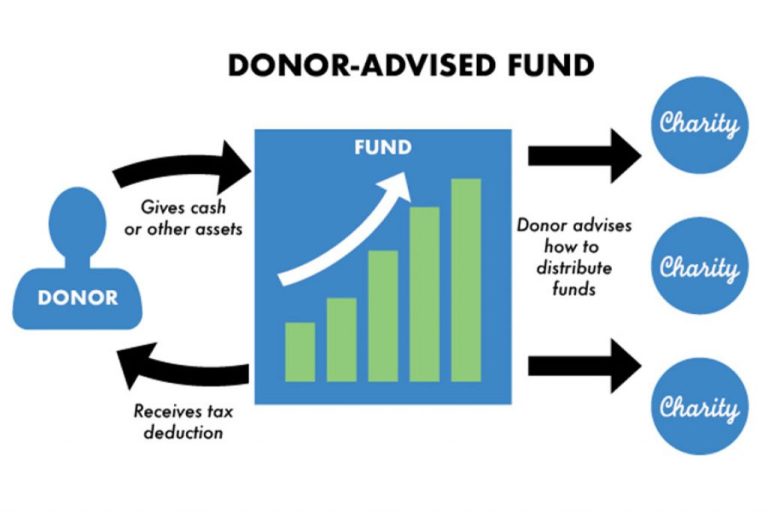
1. What a Donor-Advised Fund Is
A donor-advised fund (DAF) is a giving account managed by a 501(c)(3) public charity. When you contribute to a DAF, you can take a charitable deduction immediately and then recommend grants to nonprofits over time. Because DAFs are not required to distribute a minimum amount each year, contributions can remain invested and potentially grow tax-free for many years.
DAFs function similarly to charitable investment accounts, giving donors flexibility and control over how and when charitable dollars are granted. Most brokerage firms—including Fidelity, Vanguard, and Schwab—offer donor-advised fund programs.
2. Tax Benefits and Contribution Rules
DAFs can be particularly helpful in years when the standard deduction makes itemizing more difficult. By contributing a larger amount in a single year, donors can maximize their tax benefit while still spreading charitable support across future years.
For 2025, cash contributions to a DAF are generally deductible up to 60% of adjusted gross income (AGI). Donors may contribute cash or a wide range of appreciated assets such as stocks, mutual funds, bonds, privately held business interests, restricted shares, or even cryptocurrency. When donating appreciated assets held for more than one year, the donor usually qualifies for a deduction up to 30% of AGI and avoids capital gains tax on the appreciation.
DAFs do include administrative fees—often around 0.6% annually for accounts under $500,000 at major firms. Importantly, qualified charitable distributions (QCDs) from retirement accounts cannot be directed to a donor-advised fund.
3. How Donor-Advised Funds Work for Charitable Giving
Once funds are contributed, donors can recommend grants immediately or spread them out across years. Grants can be directed to one charity or to multiple nonprofit organizations. Meanwhile, assets inside the DAF can continue to grow tax-free, potentially increasing the eventual amount available to charities.
From a nonprofit’s perspective, little changes—they receive grants from the DAF sponsor just as they would from any direct donor. The major advantage for the donor is flexibility: they control the timing of the tax deduction and decide when and how much to distribute to organizations they care about.
Take Action Today!
Donor-advised funds provide a flexible and tax-efficient way to manage charitable contributions, giving donors greater control over when they claim deductions and how their gifts are ultimately distributed. Whether you want to streamline your giving, donate appreciated assets, or build long-term charitable resources, a DAF can be a valuable tool in your philanthropic strategy.
If you’re considering opening a donor-advised fund or want help determining whether it’s right for your situation, our team at NSO and Company is available at (317)-588-3131 to guide you every step of the way.

Frequently Asked Questions
Our clients appreciate our fair, transparent pricing — no surprise fees, no confusing invoices. Individual tax returns start at $750, and business returns start at $1,500. If you’d like to talk through your specific situation before committing, a one-hour consultation with a CPA and tax preparer is $250.
Every client’s needs are different, so these starting rates can vary based on the complexity of your return or the scope of services you need. Visit our pricing page for more detail.
If you need accounting, bookkeeping, or tax services, contact us today — we’d love to learn more about your situation and provide pricing tailored to your needs.
We work with a wide variety of individual and business clients across central Indiana. Our clients range from entrepreneurs and small business owners to business professionals, retired individuals, families, and business corporations of all sizes.
Whether you’re just starting a business, managing personal and family finances, planning for retirement, or running an established company, we tailor our accounting, tax, and advisory services to fit where you are and where you’re headed. No two clients are exactly alike, and neither is our approach — we take the time to understand your specific situation so we can offer advice that actually applies to you.
NSO and Company is located in Fishers, Indiana, just off I-69 near the intersection of Lantern Road and 96th Street — an easy, convenient drive from anywhere in the Indianapolis area. Our office is at 8950 Fitness Lane, Suite 100, Fishers, IN 46037.
We’re open Monday through Friday, 8 am – 4 pm, and welcome walk-ins as well as scheduled appointments. If you’d like to speak with someone directly, call us at 317-588-3131.
NSO and Company combines years of experience with personalized service to help individuals and businesses prepare their taxes accurately and on time. We take the time to understand your situation, answer your questions, and look for opportunities to help you maximize your tax savings, while staying compliant and making the process as smooth as possible. Our clients also value our fair pricing and the confidence that comes from working with a trusted local firm.