
Money can affect you almost every day. Whether you are starting a company, planning for a family, or working to improve your savings, the following five financial terms will help you master how to better handle your money.

1. Net Worth
*Assets – Liabilities = Net Worth
Meaning:
This is everything you own (assets) minus the things you owe others (liabilities). The outcome is your net worth.
Importance:
This shows how well you are doing, financially. For example, you can make your dream amount of money but still be stuck in debt. Tracking your net worth tells you whether you are progressing, staying stagnant, or moving backwards.
Tip:
Be sure to track your net worth frequently. Consider changing your spending, saving, and investing habits if your net worth is not improving. Make a habit of calculating your net worth at the beginning of the year and comparing it over time.
2. Compound Interest
Definition:
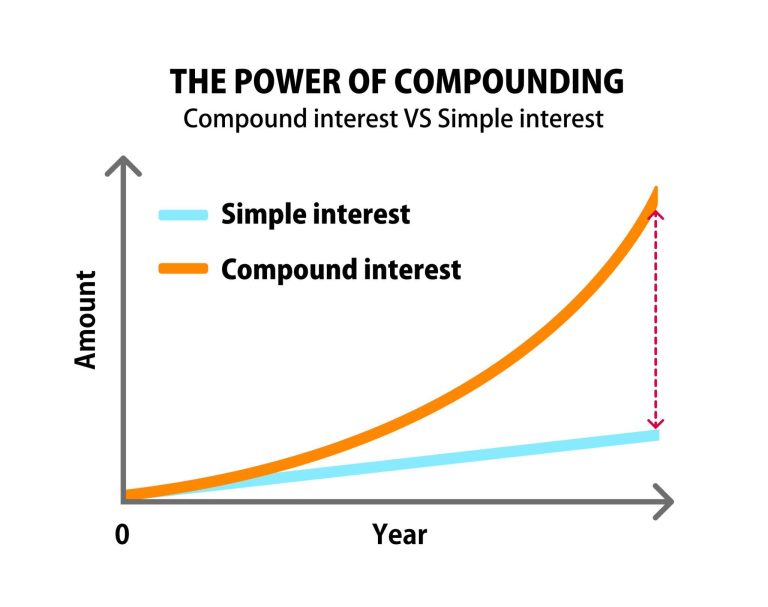
This is extra money earned. It is earned on the interest of the interest that was made during previous time periods.
Meaning:
Compound interest multiplies! It is the invisible, yet powerful energy behind your retirement, savings, and long-term investments. The earlier you start investing, the better your outcomes will be.
Tip:
It’s never too late to start compounding. Start as soon as you can. Be sure to actively manage your compounding interest because not all banks pay reasonable interest. Do thorough research before deciding on a bank so you can maximize your interest income savings.
3. Liquidity
*Liquidity = access.
Meaning:
This is how fast an asset will turn into money you can spend.
Importance:
When something unfortunate happens, you likely want access to money. Liquid assets offer a sense of financial freedom, which can be beneficial during unexpected times.
Tip:
Save for a rainy day and keep an emergency account in something ultra-liquid. This will be beneficial, so you do not have to sell items during tough times.
4. Debt-to-Equity Ratio (DTE)
*Total Individual Debt / Individual Net Worth = Debt-to-Equity Ratio (DTE)
Meaning:
DTE compares the debt you have acquired to how much you own entirely. Your equity is also known as your net worth.
Importance:
The result tells you how you are doing. It is best to aim for a lower DTE because this means you own most of what you have, versus a high DTE, which is risky and means your debt is worth more than what you own.
Tip:
Tracking your DTE is very important. Achieve a lower DTE by paying down debt and increasing your assets.
5. Loan-to-Value-Ratio (LTV)
*Loan Balance / Current Value of the Asset = Loan-to-Value-Ratio (LTV)
Meaning:
LTV is how much of a loan you still owe compared to what the asset is worth.
Importance:
Lenders look at your LTV to see how much of a risk they are taking on. A low LTV tells the lender there is less risk because there is more equity. In return, you are likely to receive better interest rates. On the other hand, a high LTV tells the lender you have borrowed most of what the asset is worth. This translates to higher interest rates, which can result in more fees.
Tip:
Keep your LTV under 80%, with 50% or under being a great goal. The more equity you build, the more control you have to refinance or sell. Think of these five terms as an introduction to your financial building block. The more familiar you are with them, the more you will be able to create a strong financial future.
Let NSO Help You Build a Strong Financial Future
Do you have further questions about these terms or want to discuss your financial picture? At NSO and Company, we can help you evaluate your options, develop effective financial and tax strategies, and help you plan for a sound financial future. Please do not hesitate to contact us at 317-588-3131 at any time of the year; we can answer your questions!

Frequently Asked Questions
Our clients appreciate our fair, transparent pricing — no surprise fees, no confusing invoices. Individual tax returns start at $750, and business returns start at $1,500. If you’d like to talk through your specific situation before committing, a one-hour consultation with a CPA and tax preparer is $250.
Every client’s needs are different, so these starting rates can vary based on the complexity of your return or the scope of services you need. Visit our pricing page for more detail.
If you need accounting, bookkeeping, or tax services, contact us today — we’d love to learn more about your situation and provide pricing tailored to your needs.
We work with a wide variety of individual and business clients across central Indiana. Our clients range from entrepreneurs and small business owners to business professionals, retired individuals, families, and business corporations of all sizes.
Whether you’re just starting a business, managing personal and family finances, planning for retirement, or running an established company, we tailor our accounting, tax, and advisory services to fit where you are and where you’re headed. No two clients are exactly alike, and neither is our approach — we take the time to understand your specific situation so we can offer advice that actually applies to you.
NSO and Company is located in Fishers, Indiana, just off I-69 near the intersection of Lantern Road and 96th Street — an easy, convenient drive from anywhere in the Indianapolis area. Our office is at 8950 Fitness Lane, Suite 100, Fishers, IN 46037.
We’re open Monday through Friday, 8 am – 4 pm, and welcome walk-ins as well as scheduled appointments. If you’d like to speak with someone directly, call us at 317-588-3131.
NSO and Company combines years of experience with personalized service to help individuals and businesses prepare their taxes accurately and on time. We take the time to understand your situation, answer your questions, and look for opportunities to help you maximize your tax savings, while staying compliant and making the process as smooth as possible. Our clients also value our fair pricing and the confidence that comes from working with a trusted local firm.
